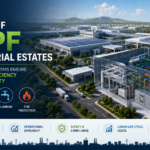
Modern industrial infrastructure is expected to do much more than simply support heavy equipment. Today’s manufacturing plants, logistics parks, warehouses, power plants, steel factories, processing units, and data centres must remain safe, operational, and adaptable for decades. As industries continue to automate processes and increase production capacity, the structural demands placed on these facilities are growing significantly.
This is where Structural Engineering for High-Load Facilities becomes essential. Structural engineering goes beyond designing columns and beams—it creates a framework capable of handling substantial static and dynamic loads, resisting environmental forces, minimizing maintenance costs, and supporting future expansion without compromising safety.
For industries across India, where rapid industrialization, changing regulations, and increasing operational demands are shaping construction practices, investing in well-planned structural engineering is no longer optional. It is a strategic decision that directly influences operational efficiency, employee safety, equipment lifespan, and long-term return on investment.
Whether constructing a new manufacturing facility or expanding an existing industrial complex, structural engineering provides the foundation for creating facilities that remain reliable, resilient, and scalable for years to come.
What Is Structural Engineering for High-Load Facilities?
Structural engineering for high-load facilities is a specialized branch of engineering focused on designing buildings and structures that support exceptionally heavy loads while maintaining long-term structural integrity.
Unlike conventional commercial buildings, industrial facilities experience far greater stresses due to:
- Heavy machinery
- Continuous equipment vibrations
- Crane operations
- Material handling systems
- Storage racks with significant vertical loads
- Industrial piping networks
- Mechanical equipment
- High-volume production activities
- Dynamic operational loads
Every structural component—from foundations to roof systems—must work together to distribute these forces safely throughout the structure.
Rather than designing only for present-day operations, engineers also consider future equipment upgrades, production expansion, changing layouts, and evolving industry standards.
The result is an industrial facility that performs efficiently throughout its entire lifecycle.
Why Structural Engineering Matters in High-Load Industrial Facilities
Industrial buildings represent significant long-term investments. Poor structural planning can result in excessive maintenance costs, production downtime, expensive retrofits, and serious safety risks.
Professional structural engineering helps organizations achieve several important objectives.
Ensures Long-Term Structural Durability
Industrial facilities often operate around the clock. Constant loading, machine vibrations, thermal expansion, and environmental exposure gradually affect structural components.
Structural engineers carefully evaluate:
- Material fatigue
- Load distribution
- Foundation performance
- Corrosion resistance
- Concrete durability
- Steel protection systems
By addressing these factors during the design stage, facilities remain operational for decades with minimal structural deterioration.
Enhances Workplace Safety
Safety remains one of the highest priorities in industrial construction.
Proper structural engineering reduces risks associated with:
- Structural collapse
- Foundation settlement
- Excessive floor deflection
- Crane failures
- Roof failures
- Equipment instability
- Seismic events
- High wind conditions
Every beam, column, connection, and foundation is designed to maintain stability under expected operational conditions.
Supports Operational Efficiency
Efficient structural layouts improve workflow throughout industrial facilities.
Engineers coordinate with production teams to ensure structures accommodate:
- Conveyor systems
- Material handling equipment
- Automated production lines
- Robotics
- Overhead cranes
- Storage systems
- Utility services
A well-designed structure reduces workflow interruptions while maximizing usable floor space.
Reduces Maintenance Costs
Many industrial facilities experience unnecessary repair costs due to poor structural planning.
Quality engineering minimizes:
- Cracking
- Differential settlement
- Excessive vibrations
- Steel corrosion
- Water ingress
- Structural movement
Lower maintenance requirements translate into reduced operating costs over the building’s lifespan.
Types of High-Load Facilities That Require Specialized Structural Engineering
Although every industrial building is unique, several industries place particularly high demands on structural systems.
Manufacturing Plants
Manufacturing facilities house heavy production equipment, assembly lines, robotic systems, and automated machinery that generate constant dynamic loads.
Structural engineers must account for:
- Machine foundation design
- Equipment anchoring
- Vibration isolation
- Heavy floor loading
- Expansion capability
Steel and Heavy Engineering Plants
Steel fabrication facilities support extremely heavy equipment, gantry cranes, furnaces, and large material storage areas.
These structures require:
- Heavy steel framing
- Reinforced foundations
- High-capacity crane girders
- Large clear spans
- Impact-resistant floor systems
Warehouses and Logistics Parks
Modern warehouses store thousands of tonnes of inventory using high-rise pallet racking systems.
Structural engineering considers:
- Rack loads
- Forklift movement
- Mezzanine floors
- Dock loading
- Future storage expansion
As India’s logistics sector continues to grow, warehouse structures must accommodate increasing storage densities while maintaining operational flexibility.
Power Plants
Power generation facilities contain turbines, boilers, generators, transformers, and heavy mechanical equipment.
Structural engineers design systems capable of resisting:
- Dynamic vibration
- Thermal stresses
- Heavy equipment loads
- Wind forces
- Seismic activity
Data Centres
Although data centres appear lightweight compared to manufacturing plants, they require exceptionally reliable structural systems.
Engineers consider:
- Raised flooring
- UPS systems
- Battery rooms
- Cooling equipment
- Generator platforms
- Future server expansion
Structural reliability directly supports uninterrupted digital operations.
Key Design Principles for High-Load Facilities
Every successful industrial project begins with sound engineering principles.
Accurate Load Assessment
The first step involves identifying every force acting on the structure.
Engineers evaluate:
Dead Loads
Permanent structural components including:
- Concrete
- Steel framing
- Roofing
- Walls
- Fixed equipment
Live Loads
Temporary operational loads such as:
- Personnel
- Inventory
- Mobile equipment
- Maintenance activities
Dynamic Loads
Industrial facilities generate moving loads from:
- Cranes
- Machinery
- Vibrating equipment
- Automated systems
- Material handling equipment
Dynamic loading often governs structural design in industrial environments.
Environmental Loads
Indian structures must also withstand environmental forces including:
- Wind loads
- Earthquakes
- Rainwater accumulation
- Temperature variation
- Flood risks in vulnerable regions
Proper structural analysis ensures all load combinations remain within acceptable safety limits.
Selecting the Right Construction Materials
Material selection significantly influences durability, maintenance requirements, and project costs.
Structural Steel
Steel remains one of the most widely used materials for industrial construction because it offers:
- High strength-to-weight ratio
- Faster construction
- Long-span capability
- Expansion flexibility
- Ease of modification
Protective coatings improve corrosion resistance in aggressive industrial environments.
Reinforced Concrete
Concrete provides excellent compressive strength and performs exceptionally well in:
- Foundations
- Machine bases
- Heavy floors
- Retaining walls
- Underground structures
Its durability makes it suitable for facilities exposed to heavy operational loading.
Composite Construction
Many modern industrial facilities combine structural steel with reinforced concrete to maximize strength, efficiency, and construction speed.
Composite systems provide:
- Improved load capacity
- Reduced structural weight
- Better vibration performance
- Enhanced fire resistance
Foundation Design for Heavy Industrial Structures
No industrial facility can outperform its foundation.
Foundation engineering begins with comprehensive geotechnical investigations to understand:
- Soil bearing capacity
- Groundwater conditions
- Settlement characteristics
- Rock depth
- Seismic behaviour
Depending on site conditions, engineers may recommend:
- Raft foundations
- Pile foundations
- Combined footings
- Machine foundations
- Isolated footings
A properly engineered foundation distributes structural loads evenly while preventing long-term settlement issues that could affect production equipment and structural performance.
Designing for Long-Term Durability
A high-load industrial facility is expected to perform reliably for 30 to 50 years or more. During this time, the structure must withstand continuous operational stress, changing environmental conditions, and evolving production requirements. Designing for durability ensures that the facility remains safe, functional, and cost-effective throughout its lifecycle.
Durability begins with selecting high-quality construction materials that can resist corrosion, moisture, chemical exposure, abrasion, and temperature fluctuations. Structural engineers also specify protective coatings, waterproofing systems, and corrosion-resistant steel where required, particularly in industries such as chemical processing, marine engineering, and manufacturing.
Another important factor is designing structural members with adequate safety margins. While a structure may safely support today’s equipment, engineers also anticipate future increases in operational loads. This proactive approach minimizes the need for expensive retrofits and extends the building’s service life.
Proper drainage systems, expansion joints, thermal movement considerations, and regular maintenance planning further contribute to the long-term durability of industrial facilities.
Managing Dynamic Loads and Vibration
Unlike commercial buildings, industrial facilities are constantly subjected to dynamic forces generated by heavy machinery, cranes, conveyors, compressors, turbines, and automated production lines. These repetitive movements create vibrations that can gradually weaken structural components if not properly addressed.
Structural engineers perform vibration analysis to evaluate how equipment interacts with the building. The goal is to prevent excessive movement that could damage machinery, reduce precision, or create unsafe working conditions.
Several engineering solutions help minimize vibration-related issues, including:
- Dedicated machine foundations
- Vibration isolation pads
- Reinforced floor slabs
- Increased structural stiffness
- Strategic equipment placement
- Expansion joints for vibration control
Managing vibration not only protects the building but also improves equipment performance, extends machine life, and enhances worker comfort.
Earthquake and Wind-Resistant Structural Design
India’s diverse geography exposes industrial facilities to varying levels of seismic activity and wind forces. Facilities located in seismic zones or cyclone-prone coastal regions require specialized structural solutions to ensure safety during extreme events.
Structural engineers design buildings to withstand lateral forces by incorporating:
Seismic Design
Earthquake-resistant design focuses on allowing the structure to absorb and dissipate seismic energy without collapsing.
Common techniques include:
- Shear walls
- Braced steel frames
- Moment-resisting frames
- Base isolation systems (where applicable)
- Ductile detailing of reinforced concrete
- Flexible structural connections
Compliance with relevant Indian Standards, such as seismic and structural design codes, helps ensure buildings meet safety requirements.
Wind Load Analysis
Tall industrial buildings, warehouses, power plants, and logistics centres often experience significant wind pressures.
Structural engineers evaluate:
- Wind speed for the project location
- Building height
- Roof geometry
- Cladding systems
- Internal pressure effects
- Wind uplift forces
Proper wind engineering reduces the risk of roof failures, structural instability, and damage during storms.
Designing for Future Scalability
Industrial businesses rarely remain static. Production volumes increase, machinery evolves, and operational layouts change over time. A facility that cannot accommodate future expansion may require costly structural modifications or even complete redevelopment.
Structural engineering for high-load facilities should always incorporate scalability from the earliest design stages.
Engineers may include:
- Additional structural capacity for future equipment
- Modular steel framing systems
- Expandable production bays
- Flexible column spacing
- Reserve foundation capacity
- Space for additional overhead cranes
- Provision for mezzanine floors
- Utility corridors for future services
Planning for expansion during initial construction is significantly more economical than modifying a completed structure years later.
For growing industries in India, scalable industrial infrastructure provides a competitive advantage by supporting business growth without disrupting operations.
Leveraging Digital Engineering and BIM
Technology has transformed structural engineering by improving design accuracy, collaboration, and project efficiency.
One of the most significant advancements is Building Information Modeling (BIM), which enables architects, structural engineers, mechanical engineers, and contractors to work from a shared digital model.
Benefits of BIM include:
- Improved coordination between disciplines
- Early detection of design clashes
- More accurate quantity estimation
- Reduced construction errors
- Better project visualization
- Faster decision-making
- Enhanced documentation
Beyond BIM, digital tools such as finite element analysis (FEA), structural simulation software, and 3D modeling help engineers evaluate structural behavior under different loading conditions before construction begins.
These technologies improve design quality while reducing construction risks and project delays.
Structural Health Monitoring for Predictive Maintenance
Modern industrial facilities are increasingly adopting Structural Health Monitoring (SHM) systems to improve safety and reduce maintenance costs.
Sensors installed within the structure continuously monitor parameters such as:
- Structural movement
- Vibration levels
- Strain
- Deflection
- Temperature
- Crack development
The collected data helps engineers detect potential issues before they become critical.
Predictive maintenance offers several benefits:
- Reduced downtime
- Lower repair costs
- Improved operational safety
- Longer structural lifespan
- Better maintenance planning
For mission-critical facilities such as power plants and data centres, continuous structural monitoring enhances reliability and business continuity.
Sustainable Structural Engineering Practices
Sustainability has become an important consideration in industrial construction. Organizations increasingly seek structures that reduce environmental impact while maintaining long-term performance.
Structural engineers contribute to sustainable construction by:
- Optimizing material usage
- Selecting recyclable structural steel
- Incorporating supplementary cementitious materials
- Designing energy-efficient building envelopes
- Reducing construction waste
- Planning for adaptive reuse and future expansion
Life-cycle assessment (LCA) is often used to evaluate the environmental impact of structural materials from production through demolition.
Sustainable engineering not only supports environmental goals but also lowers operational costs through improved efficiency and reduced maintenance.
Life-Cycle Cost Optimization
The lowest initial construction cost does not always result in the best long-term investment.
Structural engineers evaluate the total cost of ownership, including:
- Initial construction
- Maintenance expenses
- Repair costs
- Energy efficiency
- Operational downtime
- Equipment replacement
- Future expansion costs
- End-of-life demolition or reuse
Investing in higher-quality materials and thoughtful structural design often results in substantial savings over the building’s lifespan.
This life-cycle approach aligns engineering decisions with the long-term financial objectives of industrial businesses.
Common Structural Design Mistakes to Avoid
Even well-funded industrial projects can face significant challenges if structural planning is overlooked. Some of the most common mistakes include:
Underestimating Future Loads
Designing only for current equipment can limit future expansion and require costly structural upgrades.
Inadequate Soil Investigation
Poor understanding of ground conditions may lead to uneven settlement, foundation failure, and structural damage.
Ignoring Dynamic Loads
Failing to account for machine vibrations can reduce equipment performance and accelerate structural deterioration.
Poor Coordination Between Disciplines
Lack of collaboration between structural, mechanical, electrical, and process engineers often results in construction conflicts and delays.
Using Inappropriate Materials
Selecting materials without considering environmental conditions, corrosion, or operational demands can shorten the building’s lifespan.
Avoiding these mistakes requires experienced structural engineers, detailed planning, and thorough design reviews.
Real-World Applications of High-Load Structural Engineering
Structural engineering plays a vital role across numerous industries in India, including:
- Manufacturing plants
- Steel fabrication facilities
- Automotive production units
- Pharmaceutical plants
- Food processing facilities
- Logistics parks
- Distribution centres
- Power generation plants
- Oil and gas facilities
- Data centres
- Aerospace manufacturing
- Heavy engineering workshops
- Ports and container terminals
- Cement plants
Each facility has unique operational requirements, making customized structural engineering solutions essential.
Why Experience Matters in Structural Engineering
High-load industrial projects involve complex technical challenges that require specialized expertise. Experienced structural engineers understand how to balance safety, performance, constructability, and cost-effectiveness while complying with Indian standards and project-specific requirements.
An experienced engineering team typically provides:
- Comprehensive structural analysis
- Detailed load calculations
- Foundation design expertise
- Coordination with multidisciplinary teams
- Compliance with applicable codes
- Constructability reviews
- Long-term maintenance considerations
- Expansion planning
Their expertise helps deliver structures that perform efficiently throughout their intended service life.
Conclusion
As industries continue to modernize and expand, the demand for resilient, adaptable, and high-performing infrastructure is greater than ever. Structural Engineering for High-Load Facilities provides the technical foundation needed to support heavy equipment, demanding operations, and future business growth.
From accurate load assessment and robust foundation design to vibration control, seismic resilience, digital engineering, and sustainable construction, every aspect of structural engineering contributes to a facility’s long-term success.
For businesses across India, investing in professional structural engineering is not simply about constructing a building—it is about creating industrial infrastructure that delivers safety, efficiency, durability, and scalability for decades to come.
Organizations that prioritize thoughtful structural design today are better equipped to meet tomorrow’s operational challenges while maximizing the value of their infrastructure investment.
Frequently Asked Questions
1. What is structural engineering for high-load facilities?
It involves designing industrial structures capable of safely supporting heavy machinery, equipment, storage systems, and operational loads while ensuring long-term durability and safety.
2. Which industries require high-load structural engineering?
Industries such as manufacturing, steel, logistics, warehousing, power generation, pharmaceuticals, automotive, cement, aerospace, and data centres commonly require specialized structural engineering.
3. Why is foundation design important for industrial facilities?
Foundations transfer structural loads safely to the ground. Proper foundation design prevents settlement, structural damage, and equipment misalignment.
4. How does structural engineering improve industrial safety?
It ensures buildings can withstand operational loads, machinery vibrations, earthquakes, wind forces, and other environmental conditions while maintaining structural stability.
5. What role does BIM play in structural engineering?
Building Information Modeling (BIM) improves collaboration, detects design conflicts, enhances visualization, and reduces construction errors.
6. How does structural engineering support future expansion?
Engineers design facilities with additional structural capacity, modular layouts, and flexible framing systems that simplify future upgrades.
7. Why is vibration analysis important?
Vibration analysis protects machinery, improves worker safety, reduces maintenance costs, and prevents long-term structural fatigue.
8. What materials are commonly used in high-load industrial structures?
Structural steel, reinforced concrete, and composite construction systems are widely used because of their strength, durability, and flexibility.
9. How can structural engineering reduce maintenance costs?
Through proper material selection, corrosion protection, efficient load distribution, and durable design, structural engineering minimizes repairs and extends building lifespan.
10. Why should businesses hire experienced structural engineers?
Experienced engineers provide technically sound, code-compliant, and future-ready designs that improve safety, operational efficiency, and long-term return on investment.